
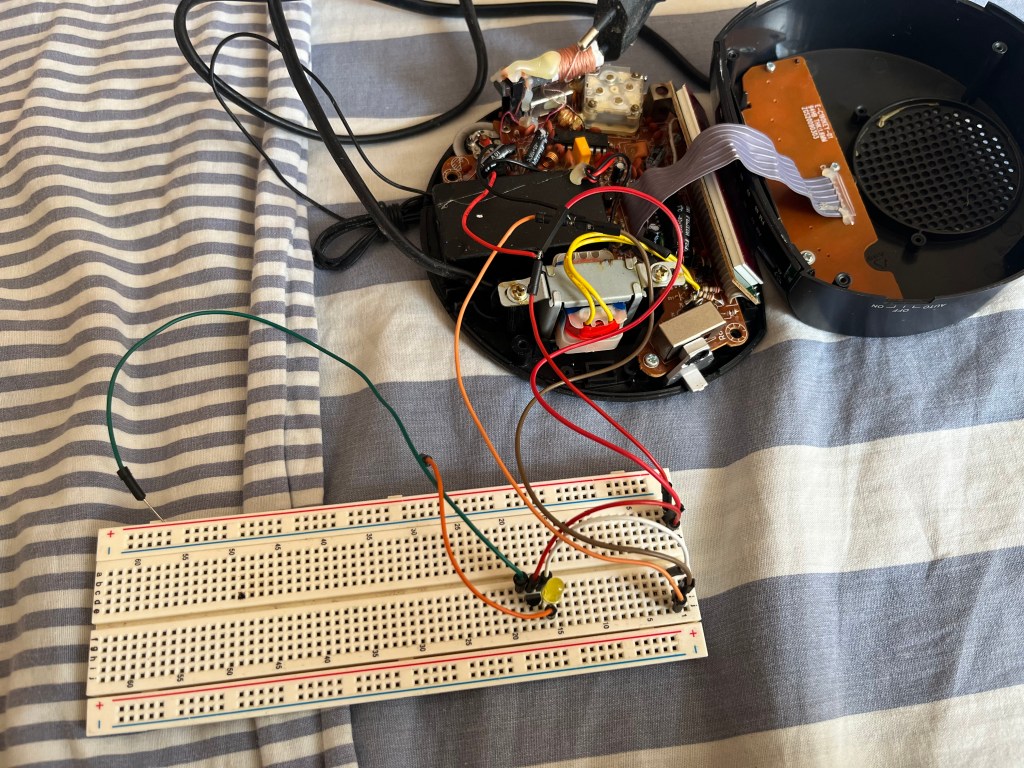
We’ve all been there. You’re in the best sleep of your life, and your body, the greedy bugger, just wants more. You concede and allow the sweet warmth and drowsiness wash over you, but just to be safe, you check the clock real quick. Cortisol flashes into your blood stream like coffee never could. Barely conscious and you’re already behind schedule.
I hate waking up late. I hate having to throw my limbs and ligaments away from my bed in an attempt to free myself from the temptation of sleep.
Now picture this; Suddenly, You’re up. From the dream world into the waking one in a seamless instant. You’ve been on this consistent schedule for months, and your body has adjusted to a (prepare for a gamer term) “frame perfect” sleep cycle.
It’s not fantasy, folks. Let me tell you, I’ve been where you may be, staying up late, waking up early and feeling miserable for the whole day. Over the summer break, I struggled heavily with waking up, because….well why should I? I can always get up and at em if there’s an actual appointment, but for my self-appointed chores I found it extremely difficult to tackle the sandman.
Enter, taser alarm clock. The easy fix for a bad sleep schedule. Can’t wake up on time? Try going back to sleep with 10,000 volts blasting your consciousness into fight or flight. Can’t get to sleep on time? Dont even stress, because I PROMISE you wont accidentally sleep in.
The build plan isn’t too complicated. Using only a digital alarm clock, a transistor, and an electric fly swatter you too can make MacGyver proud. You can also choose to use resistors to tune down the pain if you’re a coward like me.
In theory, you could disassemble the alarm clock and rebuild only the vital parts on a breadboard, but I just cut the speaker out and wired a transistor to use as a switch. I wanted to use a relay originally, but the speaker wires didn’t produce enough power to trip the relay. Quick lesson on relays and transistors;
Relays in simple terms use electromagnets to connect two wires, and the magnets activate and close the secondary circut (in this case the speaker circut would be primary and the taser would be secondary) when power is given to the primary circut. This is useful when you want a tiny little baby system with delicate baby parts to interact with another system that’s spraying out big boy volts. A transistor, is another mechanism that can be used like a relay, but the key takeaway for this project is that it doesn’t need as much power to switch on and off. Transistors have a base, a collector and an emitter. The low power flowing from the base to the emitter (primary circut) activates the other circuit, allowing power to flow from the collector to the emitter (secondary circut).
I hooked the speaker wire to the base/emitter and a replaced the button on the electric fly swatter with the transistor collector/emitter circuit. this way when the alarm function activates in the clock, instead of a signal getting sent to the speakers, the signal activates the fly swatter.
here is an initial test of the transistor/clock circuit using an LED instead of the flyswatter
video 1 : alarm clocl to LED system
The next step was to make the clock tase me instead of turning on an LED. To do things quick and dirty, I stuck the switch of the flyswatter to the transistor and replaced the end of the flyswatter with two wires connected to a bracelet made from cardboard.
I used an old jean button system as a locking mechanism, and poked two wires through the cardboard to function as electrodes for the taser.

figure 1 : electric bracelet diagram
Fixing the electrodes of the taser to the electrodes of the bracelet was pretty straightforward (I actually didn’t even solder or tape it, just wrapped the wires right on there). Initial testing on my skin was luckily not recorded, letting me carry the knowledge of how hard I flinched to my grave. Secondary testing following the trauma was then conducted on an LED and tape construct (video 2). While the LED didn’t turn on, the current was still visible running through the tape.
video 2 : Taser Bracelet test
While it is possible to hook the taser bracelet with the alarm clock mechanism, it’s not possible without soldering the button from the taser to the transisitor/clock. I’m a little too lazy (broke) to go buy a soldering iron, so I think this two piece prototype will remain a proof of concept (also, it feels like a defibrillator and I will be destroying it).
That’s the recap on this project, take care!
 Eason's Experiments
Leave a comment